It's Wednesday, the day when we talk marriage! I introduce a topic, and then you follow up either by commenting or by writing your own post and then linking up! This summer I've asked a few people to guest post to give me a bit of a break, and this Wifey Wednesday is brought to you by Cari Kaufman from Strings Attached Ministries.
This week our Marriage Champions discussion group focused a very heavy topic, you ready?….duh-duh-dun….household responsibilities. And while at first, it may seem like small potatoes in the land of marriage enrichment (I mean we are discussing difficult topics like communication, conflict management and sexual intimacy here), what we discovered is that “neglect of home and family” is second only to “mental cruelty” as a stated reason for divorce. That’s right, household responsibilities are no small potatoes in marriage.
I don’t think that revelation came as a surprise to most of the women in the room. I pray that it didn’t come as a big surprise to most of the men. Get this: it is estimated that 86% of all marital conflicts are over division of labor in the household. 86%! More than money, or disciplining kids, or sex- more arguments are over who is going to do the dishes tonight. I knew it was a big deal, but I was kind of floored by the numbers.
As we were sharing about the common stumbling blocks that interfere with a healthy relationship, there were several that caught my attention. But I think my own personal revelation as I was telling a story about socks really drove home what this whole Marriage Champions thing is all about in a nutshell. It’s about how we show love. I know, deep epiphany, right? But hang with me here.
Yep, I almost walked right out the door of the home that God had made for me….over socks.
It shouldn’t have been a big deal. Charlie approached me very gently with a pair of socks in his hand. A pair of socks I had carefully smoothed, rolled and folded together with the happy little smiling face shining out at him. He said calmly and sweetly, “Hey, Sweetie, do you think that you could not fold my socks like this? It stretches the cuff and they don’t stay up as well.”
To Charlie, this was a reasonable request. He was even helping me out by lightening my load a bit…he certainly didn’t expect the total meltdown that ensued.
“I guess the way I fold socks is not good enough for you! Do you know how long it took me to do that!?”
The conversation just went downhill from there. Then I proceeded to dredge up all the other recent discussions on laundry we had had in the last few months. (He and I do it very differently, to this day.) Charlie, for his part, reeling in the shock of my explosion, disengaged. Ugh! Not a good move. Disengaging only fed my anger and we began a vicious feedback loop which only went away after a four-hour cool down period.
My point to my ramblings is this. None of that was about socks.
It was about love.
You see my Daddy was a navy man. From the time I was a little girl, I had learned to fold socks with little smiley faces. It was how he taught me, and how he liked (and still likes) his socks folded. I don’t know if my mom likes to fold socks that way, I just know that she does. Because it is not about socks…It’s about love.
When Charlie rejected the way that I folded socks, in my mind, he wasn’t rejecting the socks…he was rejecting me. My love. My service. My smiley faces. He had no idea. To him it was just a sock that wouldn’t stay up because the cuff was stretched out. To me, it was an act of love. You see, it wasn’t the tip of the iceberg (doing laundry) that sank the Titanic. It was the huge hunk of ice beneath the surface of the water (my emotional attachment to that task) that ripped the hull in two.
Of course, at the time, neither of us understood that the laundry wasn’t the issue. It wasn’t until we started to do research on healthy marriages and put the effort into understanding our relationship that we were given the tools to identify the real issues behind the seemingly little things that can hurt or build a relationship. I encourage you to do some research and soul-searching in your own marriage. You’d be surprised how many tiny little things your spouse does everyday to say, “I love you!”
Now, what advice do you have for us today? Have you struggled with differences in doing household tasks? Or do you have something else to share with us? Write your own Wifey Wednesday post that links back to here, and then leave the link of THAT POST in the Mcklinky below. Thanks!
From Army officer to stay-at-home mom to professional speaker, Cari Kaufman's experiences give her a unique perspective into everyday life. Cari is using her ministry, Strings Attached Ministries, to bring groups and teams together to common ground to build up women’s ministry groups all over the world. Cari lives with her fabulous husband, Charlie in the heart of Northwest Arkansas and they have two amazing children, Alexander and Elizabeth.
Follow Cari on Facebook, Twitter, or visit her website for more information on booking her to speak to your group.
I'm in the final month before "The Good Girl's Guide to Sex" is due at the publisher, so I'm going to be reprinting some of my older posts two or three times over the next few weeks, simply due to lack of time! I found some I really liked, so I wanted to let some of you, who haven't been following me that long, read them!
I know today is Valentine's Day, but I always do romance on Wifey Wednesdays, so today I'd rather talk about Monday mornings. Here's a post from 2009:
Last week I started my week thinking about busy-ness. I was too busy. But I concluded that the "busy" feeling was largely one of my own making. It wasn't only that I had too much on my plate--though I did have a lot--it was also that I was letting the computer steal a bunch of my time.
So what's the alternative? Right now, I'm sitting at my kitchen table with five days in front of me. And the question is, how am I going to make those five days count? How am I going to make sure that what needs to get done does indeed get done?
I've done the to-do list thing. Many of us have. And I don't always find them helpful. Sometimes they can just be stifling, because there's so much on there it gets discouraging. When you go to make a to-do list, you often think of all the things you wish you would just complete, and those go on the list. And then your to-do list stretches a mile.
I think there's a better way to handle it, and so today I'm going to sketch out what I'd like my days to look like. I'm not saying I always achieve this, but this is the aim. And if you would like to comment and add your thoughts, too, that would be great! Maybe together we'd figure out how to use our days more productively, but also how to savour the downtime and just enjoy being with those we love. So here goes:
1. Have a morning routine. I've written about this before, because mornings are my test. If I can start the morning off right, the rest of the day tends to go well. If I dither or start too late, I become discouraged and often give up on my plans for the day! So I suggest that everyone adopt some sort of a morning routine. When we have a routine we don't need a to-do list. We know what to do, when. It becomes habit.
So, for instance, I often get up, write a blog post, read my Bible and sip hot chocolate, exercise, shower, and make my bed, in that order. It takes about an hour and a half. Now my children are older now, so I don't have to get up with them, or get them dressed, or even get them breakfast. They can get their own. I know it's tough when you have smaller children. But even then I did have a routine. I would often put on a certain video, or put them in the playpen, while I showered. I tended to have breakfast at a certain time. When we had a routine, the kids knew what to expect and didn't complain too much.
What do you do in the morning to get your day off right?
2. Put first things first. Part of my morning routine involves reading the Bible. I need to have that time just talking to God and praying, and having some quiet, peaceful time before the day begins. For a while I tried to do this before blogging, but I gave up, because frankly I'm too tired when I first wake up to have productive time being quiet. And quiet time can definitely be productive! We think things through, we pray about important things. But I can't do that when I'm almost falling asleep. So I try to do something else first that wakes me up, so that I can concentrate more and give my full attention to God.
It's important to be quiet, at least for a little bit, at the beginning of the day. Assess your priorities. Bring your worries before God. Examine your heart. When we do these things, the day tends to flow better.
3. Get active. I can't tell you how much happier I've been since I started working out in the morning! It was always something I wanted to do, but getting to the gym was so impossible. With the Wii Fit Plus, I can just workout in my own home. I'm probably not getting as strenuous a workout as I would at the gym, but the point is that I'm doing it. And I've been really consistent for about a month now. It does mean that my school day (since we homeschool) begins about a half hour later than I would otherwise, but because I've exercised I tend to have more energy!
4. Figure out what your "one thing" is. I read a great article on time management recently that said that successful people don't make to-do lists. They simply know what the one biggest priority is, and they work that priority. So their to-do list is only one thing long. I think that's brilliant, and to tell you the truth, it really does work. My one thing right now is my column. I need to get that written and sent in. When that's done, I'll have another one thing. But I find that I can worry about one thing far better than I can worry about twenty. So I try to figure out what the one thing is that is causing me the most stress and worry, and work on getting that out of the way first.
5. Have routines for "routine" things. Sounds basic, but few of us do it. You have to do laundry. You have to do grocery shopping. You have to do ironing (even if you try to reduce the amount of ironing you do as much as possible). You have to change your sheets and mop the floors. I don't think of these as to-dos, really, because they occur all the time. So do you have a routine for laundry? I throw a load in everyday when I get out of the shower. I make my bed everyday when I get dressed. I change my sheets every Friday. I iron every Tuesday. Since I know when I do these things, I don't have to think about them. They automatically get built into my day.
The more we have routines for the routine things, the less busy we feel. You know everything will get done on its day, and you don't have to do everything all at once. The problem with not having routines is that often things get out of control, and then you try to tackle everything at once. That truly is exhausting. So, as much as possible, work routines for these routine things into your week. Then they're not a source of stress. If you want some planning charts to plan your housework, I have some free ones here.
6. Be disciplined. No one likes discipline. It's not fun. But it really does help. You know what needs to be done. You know what you should be doing. Don't work too hard. Your house doesn't need to be spotless. But when you know something needs to get done, just do it. Carve out time in your day when you will get necessary things done. Don't spend your life on a computer or in front of a screen. When we're disciplined, work doesn't have to take that much time. Discipline isn't boring; it actually lets you have more fun because you live in a more organized environment and life is not so chaotic.
So there you are. My pointers for how to have a more peaceful week. I'd love to hear yours! What makes you feel more peaceful? What makes you more organized? Let me know!
I'm in the middle of cramming for my book deadline for "The Good Girl's Guide to Sex", which is due at the publisher's in just a couple of weeks. I think you're going to like it!
But because I'm so frazzled writing, I thought I'd rerun some of the blog posts from two or three years ago that many of you, who joined me recently, may have missed. Here's one I really did like--edited a bit--and I hope you like it, too!
The worst thing a husband can do to a stay at home mom when he comes home after work is to look around the house with disdain and ask, "what did you do all day?".
Them's fighting words!
And we all know it. We tell jokes about inept men like that. We laugh at them.
And yet, ladies, I want to talk just between you and me right now. Hopefully no men are listening. Do we always work as hard as we can during the day? Or do we sometimes goof off?
I know I goof off a lot. Of course, that's only natural, because being home all day with kids is exhausting. We need our rejuvenating time, we argue. We need our time to ourselves. And that is very true.
But other than well-deserved breaks (and napping when the baby naps to catch up on sleep), do we put our 100% in?
Part of the problem, I think, is that motherhood is not a job. We're not getting paid, and no one is looking over our shoulder (except God! :) ). No one has made a list of all you have to accomplish today. No one is grading your performance. No one is going to fire you. So the only way to get things done around the house is by self-motivation.
What if you don't have any?
That's a tough one, isn't it? Now looking after little ones is a full-time job. I remember how exhausted I was when my children were little. And I decided that my primary responsibility was to them first, and the house (or apartment, as it was at the time) second. We would take outings every day, and I would read to them, and play with them, and make homemade baby food, and cook healthy meals, and make sure their laundry was done and their room cleaned, but the rest of the house suffered. I know that bothered my husband, but I figured he didn't have much to say about it because the kids were getting stimulated, and that was the important thing.
Looking back, I'm not sure what I would have done much differently, except perhaps get more organized at cleaning. But the kids were my primary responsibility!
What I wish I had had, at the time, was a more organized approach to housework. If I could have kept things neat, a lot of the chaos in our lives would have disappeared. And quite frankly, I did waste a lot of time. My children were wonderfully cared for, but the house was not. And with a little organization, it doesn't take that much time.
But as the kids grew older, my housework didn't improve that much, either. I just didn't like cleaning, and I found it overwhelming. It was a definite tension between my husband and me, because he wanted the living room neat, and I felt the children took precedence (or really, my right not to have to clean everyday took precedence!). When I finally realized how important it was to him, I made it a priority to have that room clean when he came home, as an act of love. And when I started doing that, I realized I did actually have quite a bit of time for cleaning, if you do it systematically.
When you treat motherhood like a job, you get things done. When you treat it like a big party with the kids, where you all get to goof off, you don't. I loved those years with my children when they were babies, and I was awfully young myself, so I'm not beating myself up about it. But today, now that the kids are older, I have to ask myself everyday: am I working today? Or am I goofing off?
My husband is working, and doing wonderful things for our family. I owe him some effort, too. That doesn't mean that I don't take time to myself; but it does mean that I need to start seeing some of the organizational tasks that need to get done around the house as my job. Not because I'm female, but simply out of fairness: if he works, I should work.
I know many homes where she stays home with the kids, but she doesn't necessarily "work". She has the TV on all day, or she's on Facebook as much as possible, or she's reading a book. Sure she plays with the kids, but stuff around the house just doesn't get done.
I don't think that's respectful of one's husband or one's kids. We need to set an example for the kids that we all have to do our share, and that means getting stuff under control. And we need to show our husband that we appreciate his effort by putting some effort in ourselves, too.
Now if you work outside the home as well, things are a little different. I'll address that in another post. But if you're at home, caring for the house, you should be caring for the house. I don't mean to make you feel guilty; I just mean to challenge you. It is so much harder to work when there's no one standing over your shoulder. We need to learn to be our own bosses!
One of the things that helped me was developing charts, that I talk about in my book To Love, Honor and Vacuum, that help me get work done more efficiently. Everything has its day, so everything gets done in its time. You don't have to buy the book to get the charts, though: they're available for free download !
Another thing that helped was just that mental switch: I am here to do a job. Am I doing it?
Besides, believe me, your house is so much nicer to live in when it's organized. So let's all get to work!
I know in most homes cleaning is a major source of conflict--or at least frustration. There's a never-ending list of things that need to be cleaned, and yet there seems to be a shortage of those who are willing to pitch in. In fact, most moms find themselves cleaning alone, and when we do get others to help, it's often more trouble and frustration than it's worth.
Many Saturday mornings when the children were younger I remember getting all excited about carrying out my chore plan. The kids knew what to expect, we all knew what was on our lists, I put on music, and we got to it.
Or at least I got to it. I cleaned, and the girls bickered. They fought more when doing chores than they ever did at any other time--even though they weren't doing the SAME chores. Rebecca would get mad if she thought she was putting in more effort than Katie. Katie would get mad if she felt that Rebecca was telling her what to do. And I would yell and threaten and tell them nobody was getting their allowance if they're going to make my life even more miserable!
We're over that stage now, and I've learned that getting involved in their emotional squabbles aren't worth it for me. It just makes me mad, and it doesn't actually get anything done. Waltzing in and saying in a sing song voice, "Looks like nobody's getting allowance unless you both leave each other alone in the next two minutes and finish your chores", and then waltzing back out, works much better. Sometimes I've had to follow through and not given an allowance, and then they're in a lot of trouble. I won't drive them somewhere they want to go that week, because they made my life miserable. And slowly but surely they've stopped bickering.
But it's not easy. And often chore systems get complicated not because the system itself is hard, but because we let our emotions get involved, and we get wrapped up in the mind games they're playing. So here are several tips on how to recruit help for chores, and maintain your sanity in the process!
1. Accept the fact that you care about the house more than other people do.
Many kids don’t care if the house is a mess and if the only meals cooked are Kraft Dinner. Lots of husbands may not notice a dust bunny until it impedes their view of the television. So we don’t share values when it comes to keeping the house clean.
But that doesn’t mean that we can’t work towards everybody pitching in. The key is just to realize that they’re not going to do it automatically, because they don’t share the commitment to it. Expecting others to want to do it is to set yourself up for major disappointment.
Approach it another way, though—that nobody really likes doing this, but it’s something that needs to get done—and you can make a difference.
2. Talk about chores as if they're everyone's job
Start with the idea that they’re not “helping” you if they clean; it’s everybody’s job to clean, not just yours. And then just talk about what a fair division of labour is. Of course, different family members require different strategies (you have no authority over your husband, for instance), but you can make a difference, once you stop doing everything and start leaving room for others to help!
3. Stop doing everything
They’re also not going to start pitching in if you keep doing everything. Don’t clean and then fume that no one’s mopping with you. You need to stop some of what you’re doing before others pick up the slack.
4. Find a chore system that works for you
When my daughters were small, we put stickers on the fridge when they did their chores. Since they’ve been five we’ve paid them an allowance, and that’s worked well. When they were small, I also did the chore with them or checked up right then. Now we use a checklist and I expect it all done by Saturday night.
You just have to find a system that works for you. People could choose their favourite chores, and stick to those, or you could put chores on pieces of paper and stick them in a basket, and everyone “chooses” their chores for that week. Or you could rotate. It really needs to be something that works for your family. One suggestion, though: make sure every child knows how to do every chore, even if they don’t do them very often. One day, when they have their own household, they’ll have to do it, so this is part of their training for independence.
The main thing, though, is to be consistent. If you want the chores done by Saturday night, enforce that rule. If you are giving an allowance, actually give it out. Don't forget, or it loses its appeal. And if you're tying chores to allowance, then stop buying them chocolate bars everytime you're out. Make them have a reason to want to earn their own money!
5. Reward cleaning, not attitude
Disrespect is obviously not tolerated. But if a child is dawdling, and cleaning as slowly as possible, is this really worth getting into a fight over? After all, they're going to have to finish the chore before they can go do something they want to do. If they decide to be slower than molasses, they're only hurting themselves.
My suggestion? Ignore behaviour like that. Tell them firmly but happily that they have to get it done, and then leave them alone. Don't start fighting about attitude, because then you end up arguing about intangibles, and you can't win. You start arguing about whether or not someone's really trying, and they insist they are, and then where do you go? They start crying, you try not to yell, and it's ugly all around.
You require the cleaning to get done. That's non-negotiable. If they want to flop on the floor every now and then, or work slowly, or scowl, then leave the room so you can't see them.
If they start fighting with siblings, as mine often do, I just tell them that they're not allowed to make my life miserable and start taking away allowances. Or I just make sure that they're cleaning on two different floors of the house.
6. Negotiate in good faith with your husband
If your husband is just not interested in cleaning, I don’t think this is worth getting into a huge fight about, personally. What’s more important to me is that the man spend some time with the children, not necessarily that he mop everything in sight. Everyone should be doing some work for the family, but if it works out fairly that Mom does most of the housework while Dad does most of the paid work, I think that’s okay. Every family needs to come to its own equilibrium.
If, however, you both work full-time and he still does little to nothing at home, you need to talk about it. Tell him how you’re feeling, and ask him to pitch in. If he just won’t, because he doesn’t have the time or because he’s already doing a lot of other chores, like maintenance or yard work, ask for his support in getting the kids to help. Some men still believe it’s the “woman’s” job, and thus it’s none of their concern, and shouldn’t be the kids’ concern, either.
Most men, though, are firmly committed to raising children who will be independent and responsible. If you talk to him about how teaching children chores is part of helping them to be independent, he’s more likely to see the value in it, and less likely to just expect mom to do everything. So have a date and plan for the future. Ask him what he wants the kids to be like in 5 years, in 10 years, in 15 years. How are you going to get the kids to that point? What chores should they have? How many? What do they need to know how to do before they move out? You may just find you have an ally after all!
Tomorrow's Saturday, the big chore day at many people's homes. Are you ready to go? If you want to talk to your family tonight about changing the way you do things, you can download my free chore charts here!
When children are two and parents are attempting the toilet training feat, there's a phrase that we all seem to say: "Look at what a big boy/girl you are!" We encourage kids to want to think of themselves as "big". And they love it! They walk up to complete strangers and announce, "I'm a big boy!"
What happens to that pride in growing up?
It somehow disappears. Several commenters and emailers suggested I was being harsh in my Halloween column, when I said that teenagers should not be trick or treating. I know many trick or treaters in my neighbourhood last night were well past my expiry date for revelers, so I don't think that my interpretation of the etiquette of the evening is very widespread.
So I've been rethinking my take: am I wrong on Halloween? Perhaps. I've never been enamoured with the holiday to begin with, so I may be being a bit grumpy about it. But I'll tell you why I think it's important: too often we deny our children the chance to grow up.
Our society is suffering from an epidemic of overaged adolescents. College graduates move back in with their parents (though much of that is the lack of ability to find a job). People don't marry; they live together. They become addicted to video games. Teens are often very rude. They don't know how to hold down a job, even if they wanted to. They don't seem in a hurry to hit the milestones I rushed full tilt to: finish school, get married, have a baby, get a job. Those things are to put off as long as possible, so we can still "have fun". And fun is described as anything that does not require responsibility.
We live in an adolescent society, and I see that as a bad thing. Thus, in my parenting and my writing I have taken every opportunity possible to encourage children to grow up, in age appropriate ways, of course. Here are a couple of random thoughts on how to encourage kids to "grow up":
1. Talk About the Next Milestone
From the time they are little, talk "up" the next milestone. We do it when they're toilet training; let's keep doing it. See responsibility and increased ability as something to look forward to. "Soon you're going to be able to stay in the house by yourself! What a big boy!" "Soon you're going to be able to read chapter books!" "Soon you're going to be able to go to youth group!"
And then, when those milestones happen, get excited about it! Have a mini-dinner party about it! It's not hard; just at your regular sit down family dinner wear paper hats and toast the child who has reached another milestone. Talk about growing up as if it's a good thing.
2. Give Increased Privileges
I remember at each birthday for a while I was allowed to stay up 15 minutes or half an hour later at night. I was so looking forward to birthdays because I'd get to go to bed later!
That's hard to do, though, if kids don't have a strict bedtime. Parents today aren't as scheduled as parents were when we were growing up, and because of that it's hard to make distinctions between different ages. If you're already letting your 8-year-old stay up until 9:30 at night, or go to bed whenever he wants, how do you give him increased privileges when he turns 9?
Try to keep some elements of your home structured, like bedtime, play dates, how many extracurricular activities they do or what type of extracurricular activities, or what TV shows they can watch (if you have a TV). Then, when they reach the next milestone, you can let them do more things.
So don't let all children do everything. I know that's hard when you have a whole pile of kids, and you're just trying to keep things working, but distinguish between the ages. Give the older one more privileges, and then growing up will be seen as a positive thing.
3. Grant More Responsibility
At the same time, give children more responsibility as they get older. Increase the number of chores they're expected to do. Help them learn to run a household, whether it's ensuring they know how to cook a few meals by the time they're 13 or teaching them how to clean well. When kids feel capable, they tend to act more mature and think of themselves as older.
Then, with that responsibility give increased allowance. Don't give every kid the same amount of spending money; increase it as they age so that they want to get bigger.
4. Put an Age Limit on Some Activities
Here's where my Halloween strategy comes in. You may not agree with it for Halloween (though I definitely do), but think long and hard about this. We don't want children to grow up thinking that they can still act like children, even when they're in their late teens. We want to raise children who, once they're 18, will want to get a job, will want to become more independent, will want to plan for the future.
To do that, we have to encourage our children to stop thinking of themselves as kids. We have to encourage them to think of themselves as being "beyond childhood", and to see that as a badge of honour.
So take some things in your family and call them off limits once a child hits 13 or 16. I would put Trick or Treating in this category, but you may add something else, like going to a particular summer camp, or doing a certain extracurricular activity. Whatever makes sense for your family.
Just make sure that as your children age, you are distinguishing between childhood, adolescence, and adulthood, and that there is a progression. Don't assume that children will one day wake up and think of themselves as adults and be happy that they're adults!
5. Mark Milestones
Last summer we threw a blessing party for my 13-year-old. I had a mini-spa set up in my dining room and living room, where we were doing pedicures, manicures, and facials. It was great fun.
Then, afterwards, I invited twelve women and several teenage girls who Katie looked up to to say a blessing over her, and to affirm something that they saw in her. We did the same thing for Rebecca when she was 13, and it was wonderful.
This winter Rebecca is turning 16, and we'll celebrate another milestone. Our society doesn't do that as well as they did in the past. We don't have ceremonies marking the fact that "now you are an adult", because it takes so long, with education and training, to function as an adult today. But I believe that's all the more reason that we should mark milestones and congratulate our children for growing into the adults God made them to be. Help them to see themselves as growing older; help them to see themselves as being made for a purpose; help them to see themselves as capable people, whom God will use to live out that purpose.
Their life, in other words, is bigger than just them. You can't live life as an extended adolescent; we have to embrace the fact that God has called us to something, and is now equipping us for it.
One last warning: The new Superman graphic novel has radically changed the Superman character. Education writer Joanne Jacobs explains, "He’s still super, but he’s not happy about it. DC Comics’ new Superman is a sullen, brooding and angst-ridden 20-year-old who prefers a hoodie to a cape". They've turned Superman into a brooding adolescent, instead of a hero who wants to fight for justice and for what's right. Even our cultural icons have started to glamourize this extended adolescence. If you don't want that for your child, you will have to fight against it, and that means making some things off limits for teens, giving them more responsibility, and marking milestones.
That's why I believe teens shouldn't trick or treat. Perhaps it's only a minor thing, but it's part of my bigger strategy to help my girls grow up. I don't know what stage your children are at, but it starts in the early years, encouraging them to look for the next milestone, giving them increasing responsibiliity and increasing privileges, and congratulating them when they reach a certain skill level or responsibility level. Let's talk about growing up as if it's a good thing; let's remind them that it's part of God's plan.
If we all did that, I bet we'd have fewer brooding Supermen.
If you liked this post, why not share it on Facebook or Twitter below? Or share it on Stumbleupon! Thanks!
When it comes to kids' chores, there is no perfect solution except one: just do it.
No matter which method you choose of having kids do chores, the most important ingredient is the same: consistency. If you assign chores, but then don't follow up to make sure they're done, kids won't do them. If you tie chores to an allowance, but then forget to give the allowance, kids won't do them. If you teach a child how to clean a toilet, but then never look to see if they did it properly, kids won't do it right. They decide whether or not this stuff is important based on whether you act like it is important. So if you want your children to do chores, make it a priority!
And to make it a priority, you have to make it into a routine. Decide when they're going to do chores, when they're going to receive an allowance (or the payment for chores), and when you're going to verify that the chores are done. It might be everyday at a certain time; it may be every weekend; it may be every month. There is no right way. You just simply have to pick one and stick to it, or your children will not know what to expect.
With that in mind, here's a big picture look at how we have done chores in our family.
We tied chores with allowance from a young age. At age 3 we started assigning chores (like folding face cloths and using a wet cloth to wipe down the bottom cupboards in the kitchen), and then every year we'd add a few more things. The chores were written on the fridge, on a chart, and we'd tick things off every week.
They had certain "responsibilities" they had to do no matter what, like make their bed and put their laundry in the hamper and tidy their toys. The chores that they were paid for were more things that helped the family as a whole, and didn't relate to looking after themselves alone.
By the time my girls are 18 I want them to completely know how to manage a house: how to do laundry, how to grocery shop, how to organize a kitchen, make meals (including a Thanksgiving dinner!), clean furniture, and scrub floors. Every year we introduce more things to them, and they're getting more and more competent at these things.
Do you want to download some chore charts you can use with your kids? I have free ones right here (along with charts you can use to organize your own chores and schedules!)
And, if you want to read some more, here are a few other posts I've written about chores:
Now, how do you organize your children's chores? Do you put all chores in a jar and have the kids choose them? Do you assign them at the beginning of the week on a rotating basis? Do they always do the same ones? Do you use charts or do you use cards? Let me know in the comments! Remember: what system you use is not nearly as important as the fact that you use a system consistently!
It's Simplify your Life month here on To Love, Honor and Vacuum, and in my introductory post I talked about how we'd be doing three things this month: figuring out your purpose, learning to organize better, and then paring down. We spent last week on the big picture "purpose" issues, and this week I want to spend on organizing.
Here's the warning I issued about organizing, though: I don't think we should become tied down to any one particular system, because sometimes the system itself that we use becomes overwhelming and stops us from feeling organized. Or sometimes a system will work for a time, but you'll lose interest, and then it's time to find something else to recapture your interest and keep you motivated to go again!
When I asked last month what's the one thing that you all want to organize better, the single greatest response I received was, "laundry!" So to kick off organization week, let's tackle laundry!
Later this week we'll also tackle scheduling kids' chores, organizing your kitchen, and keeping communication going between you and your spouse over what needs to get done.
But let's do laundry first!
Let me share how I do it, and then I'm going to link to other systems on the internet for your interest. Then I'd encourage the rest of you to leave your ideas in the comments! Remember, there is no one RIGHT way: when it comes to organizing, you need to find a system that works for your family, and even then you may need to keep renewing that system every few months. But no matter which system you use, one thing that is not negotiable is routine. When it's routine, it gets done with a minimum of fuss. When it's not routine, it doesn't.
So here, without further adieu, are my thoughts:
Washing Routine
1. Keep laundry separated according to how you wash it. I don't separate according to whose clothes they are, because by the time Rebecca got enough whites to do a load, she would have worn the same bra two weeks' straight. I also find that by doing laundry everyday, we don't need as many clothes. Since the girls are on a clothing allowance, they've each decided to only own two pairs of jeans. Because we do our loads together, they can make do with only two pairs more easily. If they had to wait a week between loads, it wouldn't be as easy. So we just pile everyone's clothes in together. Some families with teens have kids do their own loads all at once (and when I was in university I didn't separate whites and colours; I threw them all in using cold water, and nothing really ran and the sky did not fall), but right now I just find it easier to wash everyone's together.
I have four bins: colour, white, delicate, and hand wash. My hand wash is for lingerie and hand knit items (I knit a lot!), and delicate is for almost all sweaters and nice T-shirts. It's probably overkill, but they rarely get really dirty, and if you wash them on delicate they last a lot longer.
Then, every single morning, after I have my shower, I put a load on. Just before I make lunch I put that load in the dryer and I put another load on. Just before I make dinner I put the second load in the dryer, and that's it for me in the day. Two loads of laundry usually does us sufficiently and I don't wash on weekends. That way it's part of my natural weekday habit. If you work outside the home, you can do the same thing. Put a load on first thing in the morning, and then another as soon as you step in the door after work.
The Folding Dilemma
Folding is far more haphazard; I fold while I take up schoolwork with the girls, or we all fold together while we talk about whatever novels they're reading for history and get into debates. I believe in multitasking! The big thing with laundry is that you MUST fold it, or it wrinkles horribly and it sits all over your bed and your floor.
Get in the habit of washing at set times and folding at set times, and it's much easier!
I highly envy those who live in climates where you can dry clothes outside year round. I do not live in such a place, but in the summer I'd hang the clothes out right after breakfast and right after lunch, and it always worked fine.
Getting the Laundry to the Laundry Room
As difficult as it may be to figure out how and when to wash, getting the clothes to the machine is just as much an issue. My girls each have a hamper in their closet that they are responsible for emptying. It's part of their daily chores, and everyday, after they make their beds, they're to empty their hamper. They've done it since they were four, and it works fine.
But I have a secret to admit. I don't have a hamper. In the mornings, my husband and I throw our dirty clothes by the door to our bedroom, and then when I leave the bedroom, I scoop them up and take them to the laundry room. Isn't that horrible? I know, one should never put clothes on the floor, but honestly, they're never there long! I don't mind my husband leaving his stuff there because I do, too, and it's no more work to add his socks to the bundle of clothing I'm already carrying of my own.
Of course, there are much more elaborate systems for laundry, and if you're looking for one, or if you're overwhelmed because you need to do more than two loads a day, here are a few more thoughts:
1. Often the reason laundry becomes overwhelming is because we are washing things that are not really dirty. Children, especially, have a habit of throwing things in the hamper because it is easier than putting them away.
Have a conference with your family to decide your own rules on how often pants should be worn before they're washed; how often towels can be used before they're washed; how often sheets should be changed; how often pajamas should be changed. Personally, I wear jeans a good four times before I wash them, unless I spill something on them or I'm in a smoky place. They really don't get dirty. Sheets we change every week, and pajamas once a week. Towels are more haphazard.
But many children change clothes several times a day, just for fun, and when they do change they throw their clothes in the hamper. By the time you discover that clean clothes are in the hamper, they've already mixed with wet towels, so you have no choice but to wash them. Often the reason we have so much laundry, then, is because we're washing things that aren't actually dirty.
So talk to your kids about how often they need to wash certain items, and if they keep putting clean clothes in the washing machine, then I'd start making it their job to wash and fold all the laundry, or making them pay $1 out of their allowance for that load of unnecessary laundry!
2. Keeping track of which clothes are whose can also be a challenge. Buy one child all green underwear and another all white. Buy one boy all grey socks and another all black socks. Try to keep the basics that we get mixed up to single colours, so that you know whose is whose. And take a permanent marker and write a child's initials on the tag so you know whose it is. If the item is then passed down, use a different colour permanent marker.
Now, here are some other great laundry links:
Laura from Organizing Junkie just has her kids do their own loads--and loves it! No more sorting. Read her thoughts here.
If you want pictures, here's a great post with different hampers, small and large laundry rooms, and more to give you inspiration.
One last problem: I still haven't come up with a solution to the single sock phenomenon. But I cannot bring myself to throw out single socks. So I have a box under my bed. Here it is. Did any of you steal the mates?
Now, what are your thoughts? How do you do laundry? Did you find a system worked better for you at a different stage in your life? Let me know in the comments, and let's help each other!
I've been talking lately to Deb Mantel, a professional organzier dedicated to "making women's lives more manageable. She's been taking some of my speaking training, and I've been drooling over her organizing skills, like this picture of "spaces with soul" up on her website. I love art like that on the walls, but I've never figured out how to get it there. The whole picture says peace to me, but I can never seem to achieve that in my house.
But even if I'm not perfectly decorated (I have too much of an ADD personality to be a decorator), I have gotten a lot more organized over the last few years. And so I thought I'd ask Deb some of the questions that we deal with a lot at To Love, Honor and Vacuum, since she knows so much about organizing. So here goes:
Are women more organized today or less organized today than our grandmothers were?
I think women are less organized than our grandmothers simply because the options and choices of how to spend their time, energy and money are overwhelming. Women in earlier generations may have had a lot on their plate, but it was all related around the home and family. Usually they were stay-at-home moms and there was not a lot of carpooling or activities to keep them running around.
I often hear women complain that they’re too busy. Are we, or have we just not figured out how to organize our lives best?
I think we are too busy. In his book Margin: Restoring Emotional, Physical, Financial, and Time Reserves to Overloaded Lives, Dr. Richard Swenson defines margin as the space that should exist between our load and our limits. Whether it’s our finances, our emotions, our health or our schedules, we need margin for several reasons. First, because life happens. If we are filled to the brim emotionally, maxed out financially, and booked solid, then we have no room to respond to the stuff of life that happens all around us. Second, as Christians, margin allows us to have room to hear God and to respond to what He brings into our lives. Ideally, we have margin in our lives so that we (and all that we have) are available to God and His plans and purposes.
Do you think we have too much stuff? I know I have too much stuff, and I spend my life weeding it out. What’s the psychological effect of too much stuff?
We have way too much stuff and it can really sap us of energy. We struggle with always wanting more, often because we think it will fill us. But too much stuff can actually rob us in many ways—our time (it takes time to shop for things, to take care of things), our health (too much stuff often leads to disorganization which causes stress), our space (instead of having room in our lives and homes, we often need to rent storage units to house the excess), and even relationships (the more we are managing our “stuff,” the less time we have to build relationships). Relationships should always trump stuff!
I think I’m more organized the older I get (and the older my children get). Can you give any tips for being organized when you have very little ones underfoot?
Clear away as much clutter as you can so that you have less to maintain. Set up very simple storage systems so that kids know what goes where and can access things and put them away easily. Keep your schedule as free as possible and try not to over-schedule your kids. I remind women that our children look at us to see what a life with Jesus is like. When they look at us, do they get a glimpse of the Good Shepherd, who leads us beside the still waters? Or do they view Jesus as a hard taskmaster, always driving us to do more, be more, have more! The question is not can Jesus give us rest (Matt. 11:28), but do we want what he offers ENOUGH to let go of what He ISN’T calling us to.
What do you do when you want to keep an organized home and your husband feels it’s entirely your job? What about when he leaves dirty socks all over the house, for instance, or doesn’t encourage the kids to do chores because it’s “mom’s job”. Any advice?
That’s a hard situation to be in. Ideally, some healthy communication needs to happen so that the husband can understand that keeping a house organized is not something one family member can do alone. It’s like any team effort (husbands can usually understand sports!). It takes the entire “team” to win the game. Everyone has a role to play. As early as possible, children should be shown how to take care of their belongings and how to respect common living spaces (by keeping them neat and not leaving personal items/messes around).
How can we teach kids to be organized, especially when it comes to schoolwork and responsibilities?
It’s important to help children learn the connection between “responsibilities” and “privileges” from an early age. This can help down the road when the tendency is for Mom to nag at the kids all the time. Besides the responsibility of helping the home “team” keep the house running smoothly, children need to learn that their main “job” during this season in their lives is to study and develop their minds (school). Whether they are home-schooled or attend public or private school, homework and staying on top of their studies is one of the “responsibilities” that come with that “job.” Privileges (special outings, activities with friends, movies, tv, etc. are tied to responsibilities). When we can help our children to see that it is their “choice” whether they earn the privilege or not, it takes the onus off of Mom to stay after them all the time. It takes a lot of time and effort, but it’s worth making this clear when they are young!
I think that's all great advice! What resonated with you most? What do you want to talk about some more? Let me know in the comments, so we can keep helping each other!
Deb Mantel is a professional organizer and a songwriter and speaker. Find her at www.debmantel.com.
Keith made a comment to me last night that I thought was interesting. He said:
One of the things I love about really busy days at work is that I can get all kinds of things done, and rush around and be occupied all day, but I know what I'm doing. It feels great. I feel so competent. I hardly ever feel that way at home because I don't know how to do much!
Now my husband is a doctor, so he's a very bright person. But he's at a loss when it comes to looking after a lot of the stuff that goes into the house and the kids.
It's not like he can't do housework or cook. On the contrary! When we were first married, we pretty much split everything. I was no better at cooking than he was, because we both had about as much experience. We often cooked together, or took a few hours on the weekend to clean up our apartment. Either of us could do anything. And when we weren't looking after the apartment, we were both studying, because we were both in school.
Gradually, though, things changed. I became more interested in recipe books. He became busier at his studies and his job. When the kids came along, I organized the apartment for all their stuff. I had to figure out a schedule for laundry, because I was now home full-time, and Keith was working more than full-time. I figured out how to keep the kids busy all day.
It's not that Keith couldn't do laundry or couldn't cook; it was just that because I was the one who primarily did it, I set up the systems in our home as to how it was going to get done.
And it was the same with food. I started researching nutrition, and decided to cook a certain way for our kids. I decided to branch out with the fruits and vegetables we were eating. I experimented with new grains. And suddenly, the spaghetti and shepherd's pie that we used to make together in that small apartment weren't staples anymore. They're always enjoyed when we make them again, but I tend to add more vegetables now. I add different spices. I make it more elaborate, and he sometimes feels inadequate.
Keith still does cook occasionally, although when he's responsible for dinner, he often goes the frozen entree route. He often mops and cleans up when I'm away, to get the house nice for me to come home to. He can do laundry, I suppose, but I don't know when the last time was that he threw on a load. I use homemade laundry detergent now, and he doesn't know how much to put in. But if he ever had to, he could. And if we ever need something installed, he does it! He's the one who put together this closet organizer for our oldest daughter:
But on the whole, he brings home the bacon, and I cook it.
What happened, I believe, is that we both specialized. When we were first married, we both pretty much did the same things. But as time went on, he got better at work and making money, and I got better at organizing the household and the kids. It's only natural. When you spend most of your time in one sphere of life, you become better at it.
That's not a bad thing. That's one of the main benefits of marriage. When you specialize, you get more efficient at things than when both of you try to do 50% of everything. You can't really enjoy this level of specialization, though, if you're afraid that your marriage won't last. If your marriage is in jeopardy, then you're worried about doing everything should you have to. It's a much less productive relationship. And indeed, in the book The Case for Marriage, the authors show study after study which demonstrate that couples who specialize tend to make more money, have nicer homes, and better behaved kids, because everyone concentrates on what they're good at and works hard in their primary sphere of influence.
Of course, both parties have to be able to step into another's sphere in an emergency. You never want to be in a position where you have to work, but you have no skills, or you have to look after the finances, but you have no idea what accounts you own. Or what if your husband had to cook a meal? But I don't think we should resent the fact that we're good at certain things, and he's good at others. It's not sexist. It's just natural.
Nevertheless, if your area of specialization takes up absolutely all of your time, while he has plenty of free time, that's an imbalance in your relationship that needs to be fixed. If you're both working, but in different areas, that's fine. If one of you is taking advantage of the other, it's not. Are any of you in that position?
You also don't want to get in a situation where the husband feels that he's not WANTED in your sphere of influence. Whatever you do, ladies, never, ever, push your husband away from your children because "he doesn't do it right". The children deserve a relationship with their dad which will be different from their relationship with you. Encourage that relationship, even if dad does things in ways that you wouldn't. I know many women who end up pushing their husbands away because when they come home from work, they wreck the routine the moms have going, or they make more work for everyone, so it's easier if they're away.
Don't do that. If you find yourself resenting your husband when he's home, change YOUR routine. Include him. Plan more family things, and fewer solely kid-centered routines. It's as much your problem as it is his if he doesn't feel welcome.
But beyond this, don't sweat too much if you find yourself cooking most of the meals and him working more, even if you swore you'd always have an equal marriage. I swore that, too. But my definition of equal has changed. We both work hard in the areas we're called to. That's what's important, and that's what makes us tick so well!
What about you? How does specialization work in your home? Do you need help stepping back a bit and letting your husband in? Do you need help getting your husband engaged with the kids? Let me know, and let's see if we can help each other in the comments!
In our hectic lives, everyone is searching for that elusive thing called "balance", where we feel like we're living out our priorities, we're able to get the rest we need, but we're still being purposeful.
What if the whole idea of balance is more like a millstone around your neck than it is a real thing to aim after, though?
Let me explain. Balance, in and of itself, says that some things must lose. It says that you have to put less of an emphasis on one thing so that you can put more of an emphasis on something else. To aim for balance is really to aim for a constant series of trade-offs. You decide that this will have to go, that you can't do this, all so that you can do this.
It's not exactly an easy psychological process.
What if there's a better way? A bunch of very disparate but interesting things have led me to this conclusion. First, I was reading Kathy Peel's book The Family Manager while staying at a friend's home recently.
Her point is that many housewives are extremely capable when it comes to organizing work or organizing big functions at church, but we can't seem to organize our homes. The solution? Take what you're good at and apply those same principles at home. In other words, work to your strengths.
I've read something similar in another book recently, which even though I disagreed with much of it, that one part I thought was useful. Forget balance; instead, figure out what you're good at. What makes you feel alive? What gets you excited? Now concentrate on maximizing your time for that.
At the same time, I've been delivering a number of messages at various speaking engagements about finding your purpose in life. And it occurs to me now that if we apply all three of these principles to our lives, we'd be a lot happier than if we just sought balance. So here's what such a life would look like:
1. Figure out your purpose. What is it that God is calling you to right now? Where does He want you investing your time, your money, your energy? Sometimes there may be just one area; some of us have several areas. I feel called to speak, to homeschool, and to lead the Bible quizzing program with our youth at church. One of those areas is simply my specific responsibility (my family). God always calls you first and foremost to your family. The others are more where I am using my gifts and serving in my particular church.
When you figure out where you are most called, then it's easier to emphasize those areas. Forget everything else. Let it all fall by the wayside. We don't need to be "balanced", doing everything in moderation. We need to be sold out to the areas where God has called us!
Figure out where God has called you, and ditch the rest. Yes, the other stuff needs to get done. But God will call someone to do that other stuff. Your responsibility is just to live out the areas where you are called.
I believe that we are always called primarily to our families and to the people who are closest to us. Those are the people that God has trusted us with to show them Jesus. We are also called to our local body of believers, to serve in at least some capacity. I don't think having children gives you an excuse not to serve. We all can be serving somewhere, because without us the church can't function. So ask God to show you in what one area you can serve that will make a difference.
2. In those areas where you feel called, work to your strengths. Maybe you don't cook. Maybe you never will learn to love cooking or cook very well. That's okay. Stop beating yourself up about it. Learn to make 7 meals well, and rotate them every week. You're allowed. Maybe your real gift is in making a fun home where you play lots of games and create an atmosphere where people just plain have a roaring good time, even if the house is never in tip top shape.
That's who you are. Stop trying to become someone you're not. What are your strengths in your family? Play to them. Do the things that you do well, and then figure out how to minimize the other tasks which do need to get done so that you have more time for your strengths. Don't strive for balance, because in your case, balance means spending more time on stuff that frustrates you and makes you miserable, and less on stuff that gives you life.
I was reminded of this a few years ago when I went on a craft binge. I bought painting supplies. I bought fabric to sew. I bought all kinds of stuff. And then I started doing it and hated it. I sewed my maternity clothes and they never fit quite right. I tried to stencil something and kept going out of the lines.
And all the while my knitting sat beside me, untouched. I was trying to conquer all these other crafts that I admired, instead of doing the one that I am great at (if I do say so myself) and that relaxes me. So now I proudly announce that I don't sew, I don't cross-stitch, I don't scrapbook, and I don't crochet. What I do do is knit. Everywhere. Even in line at the grocery store (I always have a pair of socks on the go in my purse).
It may not be balanced, but it's what I'm good at and it's what I enjoy. You don't need to do everything. Work to your strengths.
When you figure out what you're good at, it's easier to apply those things to your home. If you're a spontaneous person, then create a spontaneous home. Work less to lists and more to creativity. That's okay. Don't try to be someone you're not. Figure out how to get done what does need to get done, but then create a tone for your home where you're laid back, and people can drop in anytime and it doesn't bother you.
If, instead, you're very organized, then don't try to be spontaneous! Create a schedule for your day and stick to it. You'll feel better.
Often instead of working to our strengths we work to our weaknesses. We see the things we're not good at and we spend all kinds of time trying to make ourselves better at these areas of weakness, rather than spending productive time in the areas where we do excel. If we each worked to our strengths, we'd get things done a lot more quickly and with a lot less grief.
God made you the way you are for a purpose. You do not have to be the typical Christian woman, because God may not have made you that way. He sure didn't make me that way! I function best when I have a ton of things on the go. I work really hard, and then I crash really hard, and my family loves it. We're busy, we do interesting things, we talk about interesting things, and no one day is ever exactly like the other.
That's who I am. Do you know who you are? Or are you still reading all these books that tell you that you should fit into a specific mold? I think often we mistake our identity and calling with the things in life that need to get done. Just because laundry needs to get done does not mean that you are naturally a laundry person. Just because you're looking after your children at home does not mean that you are naturally a kid person. But you can take what you are naturally good at and you can apply those things to how you manage your home, how you raise your kids, how you serve in church.
If you don't fit the mold, break it!
Just don't try to have balance, if what you mean by balance is that you do a little bit of everything. It seems to me that God calls us to live out our purpose, and to work productively six days a week, and then He calls us for one day a week to rest in Him, to have time to think, to meditate, to enjoy each other. That's the balance that we need.
So make sure that you're spending time connecting with God so that you can find your purpose. Spend time on your own everyday rejuvenating yourself so that you can live out that purpose. And then apply your strengths to living out your calling day by day. Don't be everything to everybody. Be uniquely you. And that is perfectly okay.
In the Christian wife/Mommy blogosphere, a lot of patterns are evident.
Many of us who write give very similar advice. Rely on God. Focus on being the best wife you can be, not on changing your husband. Care for your marriage & kids first. Create a nice home. Etc. Etc.
These things are all true, and I hope that people can come here for some encouragement in doing the most important job in the world!
I think most of you who do come here come to get help around the edges. In general, things are going well, but they could always use some tweaking!
Most of my posts, I think, are written with these types of readers in mind. You have a family you're committed to, and you're trying to work the kinks out. You love your husband, even if he does have faults (which you can obviously name!).
Sometimes, though, people live in a much more desperate situation. I was talking to a friend who finally ended a very dysfunctional marriage last year. She said that sometimes she would read my blog and feel so sad, because it didn't matter how much she did what I said, nothing every changed. The typical answers and typical advice weren't cutting it.
A lot of women out there feel very alone in their marriages, and if you're in a marriage where you have found your soul mate, try to put yourself in these women's shoes for a moment. Here's a comment that was left yesterday, during my Wifey Wednesday post:
I still can't get myself to accept things. My husband does not have a physically demanding job. The past 4-5 months especially have been easy. He is admittedly not doing anything at work.
I cook, I clean. I care for the kids when they're sick, no matter what time of day or if he's off work. I run our special needs child to his three-days-a-week appointments; One of those days my other son has an appointment at the same place so of course he goes as well. Sick or not, I take care of the kids. I had the flu 2 years ago and the first day I was sick he dealt with the kids, but after that? He was pissed that I was still laying around and not doing anything so he got to slamming our bedroom door when he'd go out, not shushing the kids if/when they got loud, etc. That's one of many times where he's been less than considerate.
Of course if he has a headache and stuffy nose he's swearing he has a migraine and he take several different types of medication and sleeps for 10-11 hours straight, yelling if the kids are getting loud.
We're supposed to move and our house is nowhere near ready to put on the market. It should have been on by now but while he had 3 months to lay the new flooring in our house, he didn't finish. One room still needs to be done. I, on the other hand, have all of the daily issues on top of painting every room in the house, getting the outside painted, repainting our kitchen cabinets, painting the cabinets in the hall and bathrooms, redoing the tile in our hall bath, rebuilding our master bath shower that he gutted 2 years ago and never finished, tiling both bathroom floors, decluttering and organizing so that the movers know what is storage and what goes.. I don't have the money to hire those jobs out so I have to do it.
He occasionally mows the yard, and when our kids start a sport he's gung-ho in the beginning but by the 2nd week in he's sighing and rolling his eyes when I ask if he's taking one of our boys to practice. Inevitably they'll have at least one practice or game per week that coincides with the other's practice or game, and I count myself fortunate if they're in the same park or building. Many times they aren't and because he's oh-so-worn out and has computer games to play, I'm running like a headless chicken. Throw in an active toddler and I'm busy, worn out, worn down, and just plain beat.
Yes, I'm bitter and resentful,not to mention completely jealous of women who have husbands who help out even when the husband has a busy work schedule.
Don't suggest I have a talk with him because I have. Many, many times. And many times he's sworn he'll change and help out. The only reason I'm still with him is because when I left him a few years ago I couldn't get a job anywhere and began having anxiety attacks. Not to mention lack of support from family and being made to feel like we'd worn out our welcome and I needed to quit being a child and just go back to my husband. So here I sit.
I can feel this woman's pain. Can you? Honestly, what would you do if you were married to a man who did not care for your kids, played computer games all day, and didn't lift a finger to help you? Now, admittedly, we're only getting this woman's side of the story, but I have talked to women who are living something very similar. It happens. Very frequently.
So what would you say to her? I'm going to take a stab at it now, but I invite you to answer in the comments, too. Perhaps we'll have different approaches to it, but hopefully we can offer something that would be helpful.
First, let me say that To Love, Honor and Vacuum was written exactly for women going through this. In fact, I based the book on two women I was close to who were experiencing virtually exactly the same thing. So I know from whence I speak.
And let me tell you what I told them. You cannot change him; you can only change yourself. But you have a lot of power within you to change. God is there to help you create a godly home, where everyone respects each other and grows closer to Him. That is what He wants. Your job is to ask God to show you how to build respect and godliness within your home.
Part of that job may be to stop enabling others to act in an unChristlike manner. It sounds like you do all the housework, and he does very little. That means that you do a lot for him. You don't have to keep doing this. You could sit down and tell him that you are exhausted, and some things are going to have to come off of your plate. Offer him alternatives. But show him that some of these things will directly affect him. (Laundry, for instance, or making the kinds of meals he likes. If you can live on sandwiches & cereal, it's a lot easier to make, and it's still nutritious!). Then take some of that time that you save and use it to do your devotions, to have a bath, to knit, to relax, to do what you need to do to rejuvenate. Don't do it to punish him; do it to create a new dynamic so that you can keep going.
If you're busy running the children everywhere, and he won't help, ask him what it would take for him to start driving a child to soccer. Ask him if this is possible. Don't ask him when you're angry; ask him because you simply want help. If he can't give it, you're no worse off than you are now. But ask him what is keeping him from doing it? Is he not getting enough sleep?
Or take it from a different perspective. Ask him what are the most important goals he has in life. Share with him yours. Write them on your fridge. Now ask how he's meeting them. If he wants to be a good father, then ask him how you can help him engage with the kids during the week. Does he want to take soccer? Bathtime? Bedtime? If he doesn't, and he'd just like to play computer games, then ask him how he'd like the kids to think of him. Does he want them to remember him always being on the computer, or does he want them to remember him cheering them at games?
But if he just won't (and many men won't), you have a decision to make. Can you keep living like this? If you were a single parent, you could not do it all. You could not run a house and keep the kids in all kinds of activities and hold down a job. You couldn't. You would get help, or you would cut things out. So if your husband won't help, you basically are acting as a single parent. What will you cut out? Even if your husband has abdicated responsibility for the family, you can't. And you can't abdicate your responsibility to your marriage, either. I would suggest getting the kids out of activities as much as possible and making your schedule as easy as possible, so that you don't burn out and you can keep going.
Finally, make family fun. Cut down as much as you can so you can get enough rest and sleep. And then use that energy to make your home fun. Play games. Go for walks. Laugh a lot. When family is fun, he's more likely to want to be involved. When it's all chores, he won't. And the more unhappy you are, and the more you nag him, the more he will retreat.
Some people are just plain selfish. He very well could be one of these. Your job is to find peace and fulfillment in God, and then find ways to transfer that peace and fulfillment to the rest of those in your family. Don't always resent. Don't let yourself get bitter. Change your family life so that you do have more energy and things do get done.
Oh, and about the house: stop it. Don't move. Stay there. Don't put it on the market. So you lose money. I know that's tough. But if you are always stepping in and doing everything, he never will step up to the plate. Talk about what's reasonable for both of you to do, and then you do your part. If he doesn't do his, then you can't sell the house. Don't nag him about it. Simply do your part. Whether or not he does his is up to him. And if he starts to suffer financially for it, then maybe that will inspire a burst of energy. Right now, he's probably waiting for you to come through, like you always have in the past. Don't enable irresponsibility.
One other thing about how to act biblically in marriage: there are two sides to the Proverbs 31 woman. First, yes, she did a ton and cared for her family well. But second, she had help, as someone pointed out in the comments yesterday. She had servant girls, but she also had a husband who was engaged in the family business, too. He was in the public square, transacting business, where he praised her. Yes, we're to be the Proverbs 31 woman, but it's difficult to do all of this without at least some help. If you don't have that help, I think you need to readjust what's expected of you so you don't burn out.
God designed marriage to be a genuine partnership. Sometimes it isn't. Sometimes it's very lopsided. Now if your spouse isn't much of a partner, that doesn't absolve you of the responsibility to live up to your partnership. We're to care for our homes and our kids and our husbands regardless. But that doesn't mean it's easy, and it doesn't mean that we should do everything for those who persist in laziness, enabling very unChristlike behaviour.
So that's what I've got to say. What about the rest of you? Any thoughts on how to help her? Am I being too easy? Too harsh? What do you think?
It's Wednesday, the day when we talk marriage! I introduce a topic, and then you follow up either by commenting or by writing your own post and then linking up!
Recently a woman commented on an older post of mine talking about children's chores, and getting adult children to do more around the house. I talked about the importance of securing your husband's support for insisting that children do chores, because it's so easy to be undermined if you're not on the same page.
A woman left this comment,
I have one of those husbands who expect women to do "woman's work." He's willing to to "man chores," like throwing out the garbage, cutting the lawn, shoveling snow, changing lightbulbs, and such. But do dishes? sweep? cook? shop? No way!
Interestingly, we shared chores up until our eldest was born. Then he went into "man" mode.
For five years I tried to talk with him about it and got almost nowhere, and it didn't matter much to him that I worked parttime earning money or that I cared for our child all day long. He wanted me to do what his mom did. This was his template.
So I had a decision to make: resent him or accept things.
I chose to accept things.
It got me thinking quite a bit, and I thought today we could talk this one through.
I am not a big believer in "women's work" and "men's work". I do think it's better if a woman stays home, in general, with the kids, simply because she is, after all, the one who breastfeeds, and so she's going to have that primary bond. However, I have known families where they have taken turns staying home, or where he has stayed home because she has made more money, and these families work fine. I know some women who comment here will be upset by that, but I think each family must figure out what works best for them. If the children are cared for within the family, I think that's wonderful. And one of the best six months of my life was when the girls were small and Keith and I were taking turns after he had finished his residency and he was preparing to start a practice. We were "between" jobs, so he would take one week of shifts at a hospital, and then I would take one week programming computer databases. We both made the same money, so it didn't matter who worked, and the girls got to know both of us. It was a lot of fun.
However, that's not realistic for most families, and so in most homes, the woman stays home and the husband works (or both work). And then we're stuck with this problem of "women's work" vs. "men's work". In the post that this woman was commenting on, I was talking about adult children who had never learned to contribute around the house, and were now driving their mothers nuts. The primary reason that most of these adults don't learn to contribute is that the dads don't expect it. Mom is there to do the work, so the kids shouldn't be made to. It's mom's job. And usually the adult child in this case is male.
Many cultures grow up with the idea that only women do certain types of work, and only men do others. I've never really bought that. For years I did the finances in our home, though Keith recently took that over. Keith never cut the grass because of allergies, but he's recently started gardening (he thinks it's a mid-life crisis, but I'm all for it). He always sweeps because he can't stand the way I do it (he thinks I'm wimpy and miss a lot of crumbs because I do it from the wrist and not the shoulder). He changed diapers and looked after babies. He even cooked a lot when the kids were little, but as I got better at it, he backed off, and now I do most of the cooking (also because I enjoy it).
One of the benefits of marriage is that you can each do what you're best at. If he's better at earning money, he can focus on that, while you focus on housework. There's no point in you both working 50% of the time and both doing 50% of the housework if another arrangement works out better. So you can figure out what works out. It's not so much about women's work vs. men's work as it is about what works in your family.
The problem comes when people don't feel it's equitable, and that's what's happening in this case. She's doing some "men's work"--earning money--but he's not doing any of her chores. And she's tired.
One comment she made stuck out to me--she said that they shared chores until the children came. That is very common. After children come, roles tend to revert to gender stereotypes, even if they weren't like that before. Men start to earn more money. Women take over housekeeping. Very common.
But what should she do? I think her attitude is actually quite healthy, because she's realized that she can't change it, and you don't want to nurse resentment. So good for her.
Nevertheless, I want to explore this scenario a little further, because it's one that many women live through. Personally, I think what matters is the hours one puts into a day, not the work that one does. As long as you're both putting in roughly equal effort, then I don't care what you do. So if you're looking after kids all day, that counts. However, if you get 45 minutes to watch TV while you're bouncing kids, realize that you are getting time off while your husband is not. If you get an hour to work out at the gym, then realize that you're not putting in a full 8 or 10 hour day. If you go to a women's Bible study and someone else cares for the kids for 2 hours, you're not working a full day, either.
I think many of us feel like we work all day when we don't. I know caring for kids is exhausting, but honestly, working outside the home all day is exhausting, too. I was way more tired at the end of the day after going into an office and programming databases all day than I was looking after my toddlers, because with toddlers I could control things.
I'm not saying we have it easy; I'm just saying understand that he likely genuinely is tired.
If, however, he doesn't lift a finger all weekend while you do everything, that can be a bit of a problem. The way I would address it is to institute something my grandmother did, which was brilliant, and which I've always followed. She had a rule that "if momma's working, everyone's working", where on Saturday mornings, or for half an hour right before dinner, everyone would clean up. Then, once it was done, they would have great fun together as a family because she wasn't busy anymore.
Talk to your husband about starting "work hours" on Saturday, where everyone does chores (maybe he cuts the grass while you clean a bathroom), but then afterwards everyone does something fun together. If he can see the benefits of you being free from chores, he's more likely to participate.
Another tact that might work is to talk to him about how he would like his children to turn out. Many men have an easier time thinking about what they want the future to look like than what they want the present to look like. Does he want his sons to know how to make a meal? Does he want them to know how to clean a toilet? Does he want them to be able to do a load of laundry? When he sees that this is likely important, then ask how the two of you will ensure that this happens. If he sees that it's important for his sons to know these things, since they are unlikely to marry at 21, and are likely to live on their own for a time, then he's less likely to think of it as "women's work".
What about you? Have you had these conflicts with your husband over chores? How did you resolve them? Leave a comment and let me know, or write your own Wifey Wednesday post and link up with the Mcklinky!
About Me: I'm a Christian author of a bunch of books, and a frequent speaker to women's groups and marriage conferences. Best of all, I love homeschooling my daughters, Rebecca and Katie. And I love to knit. Preferably simultaneously.













 Stumble It!



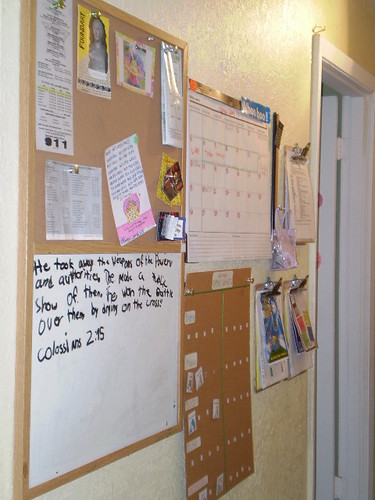
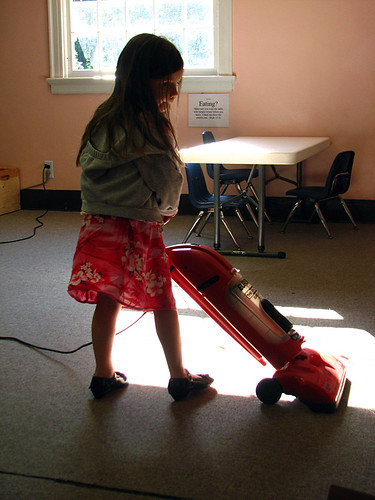

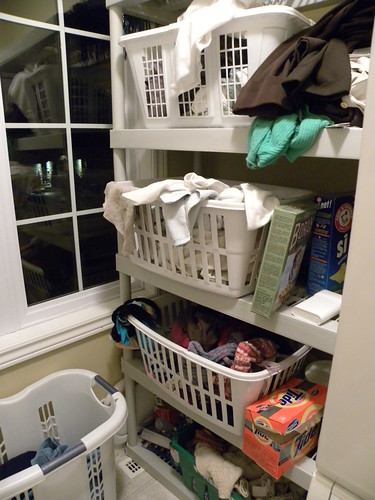


 , Dr. Richard Swenson defines margin as the space that should exist between our load and our limits. Whether it’s our finances, our emotions, our health or our schedules, we need margin for several reasons. First, because life happens. If we are filled to the brim emotionally, maxed out financially, and booked solid, then we have no room to respond to the stuff of life that happens all around us. Second, as Christians, margin allows us to have room to hear God and to respond to what He brings into our lives. Ideally, we have margin in our lives so that we (and all that we have) are available to God and His plans and purposes.


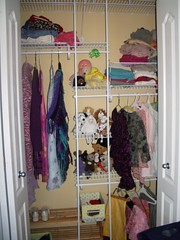

![Reblog this post [with Zemanta]](http://img.zemanta.com/reblog_e.png?x-id=7b925a22-14b4-4344-9d47-eda9fa7106f2)


![Reblog this post [with Zemanta]](http://img.zemanta.com/reblog_e.png?x-id=93991305-c298-4260-8888-5945525350ce)


